Introduction
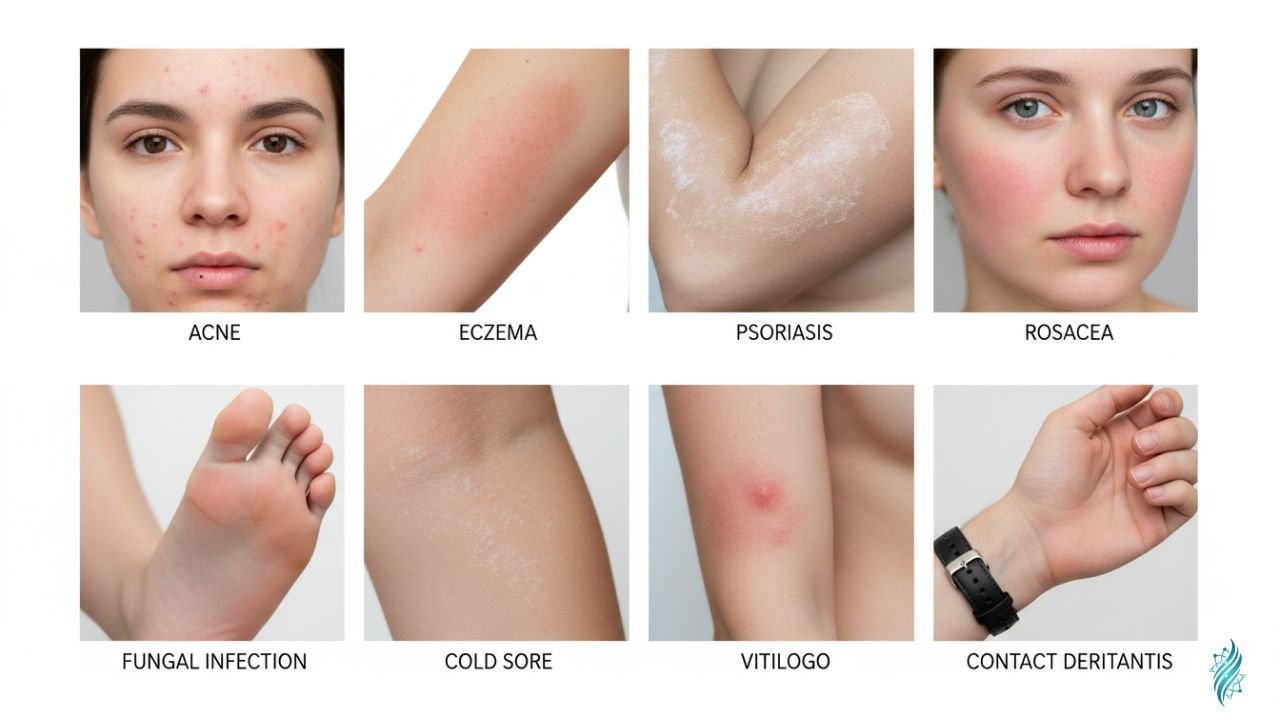
Dealing with persistent skin conditions can be incredibly frustrating and impact your confidence daily. Whether it’s stubborn acne, relentless itching from eczema, or embarrassing patches of psoriasis, these issues affect millions worldwide and can take a toll on both physical comfort and emotional well-being.
The good news? Many common skin conditions respond well to natural approaches alongside conventional care. This comprehensive guide explores 10 common skin conditions with practical, evidence-informed natural treatment for skin conditions, symptoms, causes, and prevention strategies. We’ll emphasize safe home remedies while stressing when professional medical advice is essential.
By understanding skin disease symptoms and incorporating skin problems and remedies rooted in nutrition, herbs, and lifestyle, you can support healthier skin. Remember, while natural methods help many, they complement—not replace—dermatologist skin care tips.
Table of Contents
Acne
Overview
Acne is one of the most prevalent skin conditions, affecting teens and adults. It occurs when hair follicles clog with oil and dead skin cells.
Symptoms
- Whiteheads and blackheads
- Inflammatory papules and pustules
- Painful cysts and nodules
- Scarring in severe cases
Causes
Hormonal fluctuations, excess sebum, bacteria (Cutibacterium acnes), genetics, diet, and stress contribute to the acne skin condition.
Natural Treatments
- Home remedies: Apply diluted tea tree oil as a spot treatment for its antibacterial properties.
- Foods: Reduce dairy and high-glycemic foods; increase zinc-rich foods like pumpkin seeds.
- Essential oils: Lavender and tea tree (properly diluted).
- Lifestyle tips: Gentle cleansing twice daily, non-comedogenic products, stress management.
- Herbal remedies: Green tea extract or aloe vera gel to soothe inflammation.
When to See a Doctor
Seek help for severe cysts or scarring or if over-the-counter options fail.
Prevention Tips
Maintain a consistent gentle routine, avoid picking, and manage stress. Consider internal links like Best Natural Skincare Routine.
Eczema
Overview
Eczema (atopic dermatitis) causes inflamed, itchy skin. It’s common in families with allergies.
Symptoms
- Intense itching
- Red to brownish-gray patches
- Dry, scaly, or cracked skin
- Oozing or crusting
Causes
Genetic factors, immune system dysfunction, environmental triggers like irritants or allergens.
Natural Treatments
- Home remedies: Colloidal oatmeal baths.
- Foods: Anti-inflammatory diet with omega-3s.
- Essential oils: Diluted chamomile or lavender.
- Lifestyle tips: Short, lukewarm showers and fragrance-free products.
- Herbal remedies: Aloe vera or calendula for soothing.
When to See a Doctor
For severe flares, infection signs, or sleep disruption.
Prevention Tips
Moisturize immediately after bathing and identify triggers.
For Trending Topics Visit here.
Psoriasis
Overview
Psoriasis is an autoimmune condition causing rapid skin cell turnover.
Symptoms
- Thick, silvery scales on red patches
- Itching, burning, or soreness
- Dry, cracked skin that may bleed
- Nail changes
Causes
Genetics, immune triggers, stress, infections, medications.
Natural Treatments
- Home remedies: Moisturize heavily; sunlight exposure (controlled).
- Foods: Anti-inflammatory diet, fish oil.
- Essential oils: Diluted tea tree for scaling (caution).
- Lifestyle tips: Stress reduction, quitting smoking.
- Herbal remedies: Mahonia aquifolium or turmeric paste.
When to See a Doctor
For widespread involvement or joint pain (psoriatic arthritis).
Prevention Tips
Avoid known triggers and maintain skin hydration.
Rosacea
Overview
Rosacea causes facial redness and visible blood vessels, often in fair-skinned adults.
Symptoms
- Persistent facial flushing
- Visible blood vessels
- Red bumps resembling acne
- Eye irritation
Causes
Genetics, immune factors, triggers like spicy foods, alcohol, sun, stress.
Natural Treatments
- Home remedies: Cool compresses.
- Foods: Avoid triggers; eat anti-inflammatory foods.
- Essential oils: Diluted lavender.
- Lifestyle tips: Gentle skincare, sun protection.
- Herbal remedies: Green tea.
When to See a Doctor
For persistent symptoms or eye involvement.
Prevention Tips
Identify and avoid personal triggers.
Fungal Infections
Overview
These include ringworm, athlete’s foot, and jock itch caused by fungi.
Symptoms
- Itchy, red, circular rash
- Scaling or cracking
- Burning sensation
Causes
Warm, moist environments, contact with fungi.
Natural Treatments
- Home remedies: Tea tree oil or apple cider vinegar soaks (diluted).
- Foods: Garlic and coconut oil internally.
- Essential oils: Tea tree, oregano.
- Lifestyle tips: Keep skin dry, breathable clothing.
- Herbal remedies: Neem.
When to See a Doctor
If it spreads or doesn’t improve.
Prevention Tips
Dry skin thoroughly and avoid sharing personal items.
Contact Dermatitis
Overview
Contact Dermatitis results from irritants or allergens touching the skin.
Symptoms
- Red, itchy rash
- Blisters or dry, cracked skin
- Burning or swelling
Causes
Soaps, detergents, plants (poison ivy), metals, cosmetics.
Natural Treatments
- Home remedies: Oatmeal baths, aloe.
- Foods: Anti-inflammatory.
- Essential oils: Chamomile.
- Lifestyle tips: Identify and avoid allergens.
- Herbal remedies: Calendula.
When to See a Doctor
Severe reaction or infection.
Prevention Tips
Patch testing and barrier creams.
Hives
Overview
Hives (urticaria) are raised, itchy welts from allergic reactions.
Symptoms
- Sudden red or skin-colored welts
- Intense itching
- Swelling that can change size
Causes
Allergens, medications, infections, stress.
Natural Treatments
- Home remedies: Cool baths.
- Foods: Quercetin-rich (onions, apples).
- Essential oils: Limited use.
- Lifestyle tips: Stress management.
- Herbal remedies: Nettle tea.
When to See a Doctor
Difficulty breathing or persistent.
Prevention Tips
Avoid known triggers.
Vitiligo
Overview
Vitiligo causes loss of skin pigment in patches.
Symptoms
- Milky-white patches
- Premature graying of hair
Causes
Autoimmune, genetic, environmental.
Natural Treatments
- Home remedies: Limited evidence; ginkgo biloba sometimes used.
- Foods: Antioxidant-rich.
- Lifestyle tips: Sun protection on patches.
- Herbal remedies: Consult professional.
When to See a Doctor
For diagnosis and management.
Prevention Tips
Sun protection and camouflage if desired.
Cold Sores
Overview
Cold sores are caused by herpes simplex virus.
Symptoms
- Tingling, then painful blisters on lips
- Crusting
Causes
Viral, triggered by stress, sun, illness.
Natural Treatments
- Home remedies: Ice, lemon balm.
- Foods: Lysine-rich (dairy alternatives if vegan).
- Essential oils: Diluted tea tree or peppermint.
- Lifestyle tips: Sunscreen on lips.
- Herbal remedies: Echinacea or lemon balm cream.
When to See a Doctor
Frequent or severe outbreaks.
Prevention Tips
Manage stress and use lip balm with SPF.
Dry Skin (Xerosis)
Overview
Dry skin lacks moisture, leading to tightness and flaking.
Symptoms
- Rough, flaky texture
- Itching
- Cracking or peeling
Causes
Cold weather, hot showers, harsh soaps, aging, medications.
Natural Treatments
- Home remedies: Coconut oil or petroleum jelly alternatives.
- Foods: Hydrating foods and omega-3s.
- Essential oils: In carrier oils.
- Lifestyle tips: Humidifier, lukewarm baths.
- Herbal remedies: Aloe vera.
When to See a Doctor
If accompanied by other symptoms or unresponsive.
Prevention Tips
Moisturize regularly and use gentle cleansers.
Best Foods for Healthy Skin
A nutrient-rich diet supports skin from within:
- Vitamins: A (carrots, sweet potatoes), C (berries, citrus), E (nuts, seeds), D.
- Hydration: Water-rich foods like cucumber, watermelon.
- Anti-inflammatory foods: Fatty fish, leafy greens, turmeric, olive oil, berries.
Daily Skin Care Routine for Preventing Skin Conditions
- Gentle Cleanse — Morning and night with mild cleanser.
- Tone (optional) — Alcohol-free.
- Treat — Serums for concerns (vitamin C, niacinamide).
- Moisturize — Lock in hydration.
- Sunscreen — Broad-spectrum SPF 30+ daily.
Adapt based on skin type and consider [Internal Link: Top Vitamins for Healthy Skin].
Natural Ingredients That Help Most Skin Conditions
| Ingredient | Benefits | Best Use Cases |
|---|---|---|
| Aloe Vera | Soothing, anti-inflammatory | Eczema, dry skin, burns |
| Coconut Oil | Moisturizing, antimicrobial | Dry skin, mild fungal |
| Tea Tree Oil | Antibacterial, antifungal | Acne, fungal infections |
| Oatmeal | Soothing itch | Eczema, hives, dry skin |
| Turmeric | Anti-inflammatory | Psoriasis, acne |
| Honey | Antibacterial, wound healing | Acne, cold sores |
Myths About Skin Conditions
- Myth: Chocolate causes acne. Fact: Diet plays a role but isn’t the sole cause.
- Myth: All skin conditions are contagious. Fact: Many like eczema or psoriasis aren’t.
- Myth: Natural products are always safe. Fact: They can irritate sensitive skin.
- Myth: Tanning helps skin conditions. Fact: UV can worsen many.
FAQ Section
What is the most common skin condition?
Acne is one of the most widespread.
Can skin conditions be treated naturally?
Yes, many respond to natural treatment for skin conditions, but consult professionals.
Which foods improve skin health?
Anti-inflammatory options like berries, greens, and fatty fish.
Are skin conditions contagious?
Some fungal or viral ones are; autoimmune ones generally aren’t.
How do I know if it’s eczema or psoriasis?
Eczema is itchier and weepy; psoriasis has thicker silvery scales.
Can stress cause skin problems?
Yes, it triggers or worsens many itchy skin conditions.
Is dry skin a sign of something serious?
Often environmental, but persistent cases warrant checking.
When should I see a dermatologist for skin conditions?
For sudden changes, pain, infection, or no improvement.
Conclusion
Understanding and addressing common skin conditions through natural remedies, proper skincare, and lifestyle changes can significantly improve your skin health and confidence. From eczema treatment naturally to psoriasis natural remedies, the key is consistency and listening to your body.
Embrace these habits and share your experiences in the comments below. What natural remedy worked best for you? Share this post with friends struggling with skin problems and remedies!
This article is for educational purposes. Consult a healthcare professional for personalized advice. Sources include American Academy of Dermatology, Mayo Clinic, and WebMD.